
1. List the private entrances
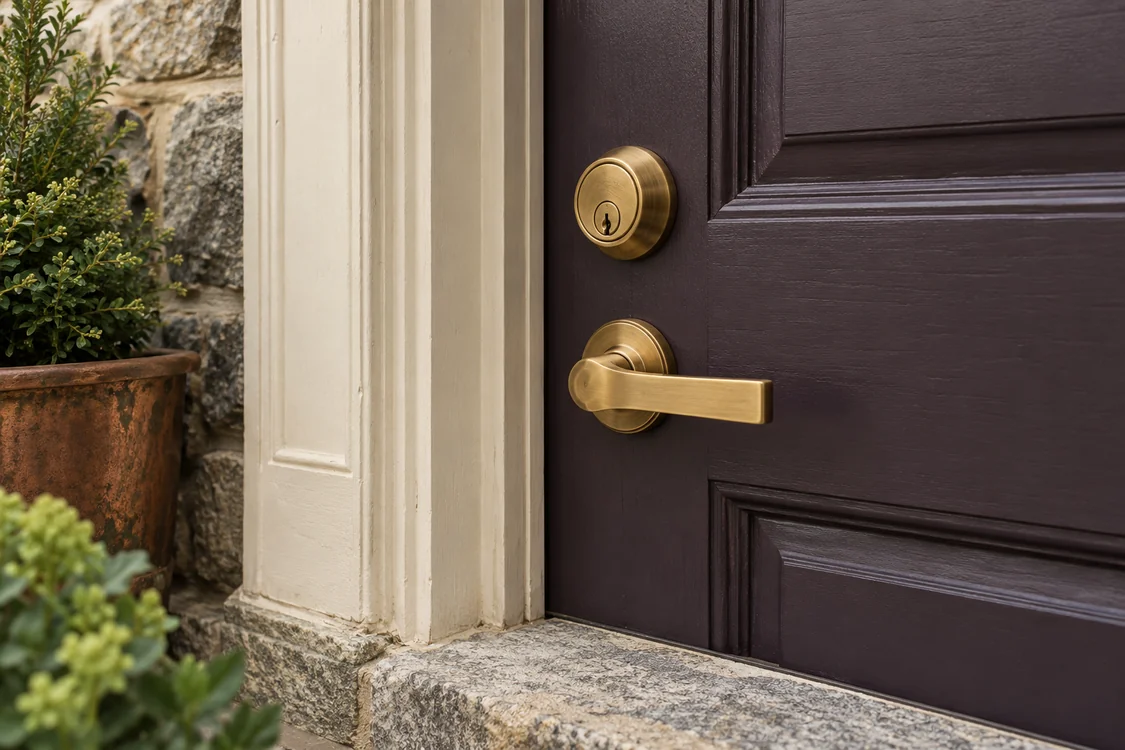
Write down the front, side and back doors, along with any keyed pedestrian door between the house and garage. A single door may have more than one keyed fitting. Record the keys you were given and what you know about their purpose; leave uncertain matches as questions rather than forcing them.
Keep common entrances on a separate part of the list. An apartment's private lock and the building's shared entry may have different owners or managers. Knowing who controls each opening matters before you request changes, even when one key currently seems to operate more than one of those doors.
2. Decide what needs to change
Ask which copies have been handed over and whether anyone still has authorized access. An incomplete key history can be a reason to discuss rekeying. That changes the working key for suitable hardware; it does not automatically require new visible fittings or resolve a mechanical problem with the door itself.
Make a separate note of sticking keys, loose handles or latches that do not meet properly. Those are repair questions as well as move-in details. If you would like several doors to share one key, ask about compatibility rather than assuming that locks with the same appearance can be matched.
3. Plan the handover after the work
Establish who can approve changes and, if you rent, clarify the arrangement with the owner or manager. Decide who should receive the working keys afterward and how a spare will be handled. Keep your inventory private; a full address attached to a loose key ring is unnecessary information to carry around.
When discussing work, give the Milton address, the doors involved and any faults on your list. Ask about availability, charges and the intended key arrangement before proceeding. At handover, review the agreed doors and keys together so everyone understands what works, what changed and which questions still need attention.
BEFORE YOU ARRANGE WORK
A few useful answers.
Should I change locks as soon as I move?
Use the move as a reason to review access and hardware condition. An uncertain history of copies may lead to a rekeying discussion, while worn or unsuitable hardware may need another approach. Establish permission and ask about the options before deciding.
What belongs on a key inventory?
List each private keyed entrance, the fittings on that door and the keys supplied. Note common entrances separately, along with who manages them. Add any observed fault and questions about missing copies, so access changes and repairs can be discussed clearly.
Who should keep copies of the new keys?
That depends on your household and any agreed owner or manager requirements. Decide who needs authorized access before work is arranged, and ask how many keys are included. Keep the handover clear rather than allowing unrecorded copies to become another uncertainty.